Devon Klein · 17 September 2026
Tracing How Technical Site Audits Reveal Patterns in Organic Visibility Shifts
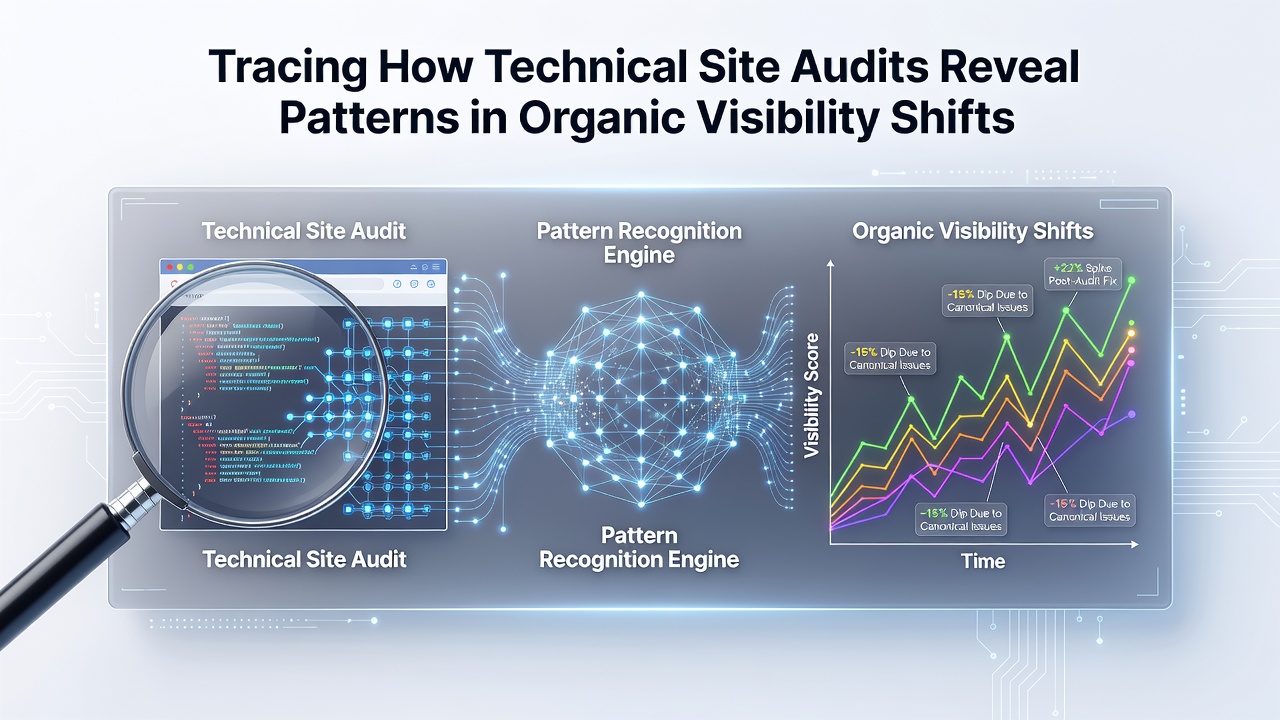
Technical site audits examine website infrastructure to identify factors that influence search engine indexing and ranking, and observers note how these examinations uncover recurring patterns behind shifts in organic visibility. Researchers have documented cases where crawl errors, duplicate content issues, and server response problems align with measurable drops in search impressions across multiple domains. Data from ongoing monitoring programs shows that sites undergoing regular audits often experience earlier detection of these issues before visibility declines become pronounced.
Core Components of Technical Site Audits
Audits typically begin with a comprehensive crawl that maps every accessible URL while recording status codes, redirect chains, and canonical tags, and this process generates datasets that analysts compare against historical search performance records. Experts track metrics such as pages per crawl, internal link distribution, and XML sitemap accuracy because these elements directly affect how search engines allocate resources during indexing cycles. Studies conducted by academic institutions reveal that sites with fragmented internal linking structures frequently display uneven visibility across category pages compared to more hierarchically organized competitors.
Page speed measurements form another standard component, with tools recording load times for both desktop and mobile versions, and findings indicate that pages exceeding certain thresholds correlate with reduced click-through rates in search results. Structured data validation checks follow, verifying schema markup for accuracy and completeness, since incomplete implementations can prevent rich snippet appearances that otherwise boost visibility in competitive verticals.
Identifying Visibility Shift Patterns
Analysts cross-reference audit outputs with search console data to isolate periods when indexing rates changed, and patterns emerge when clusters of technical issues coincide with algorithm updates or seasonal traffic variations. One documented case involved an e-commerce platform where duplicate product pages created through faceted navigation led to a sustained 35 percent reduction in indexed URLs over six months, until the audit flagged the problem and canonical tags were implemented. Similar observations appear across industries when mobile usability errors accumulate without correction, resulting in visibility losses concentrated on specific device segments.
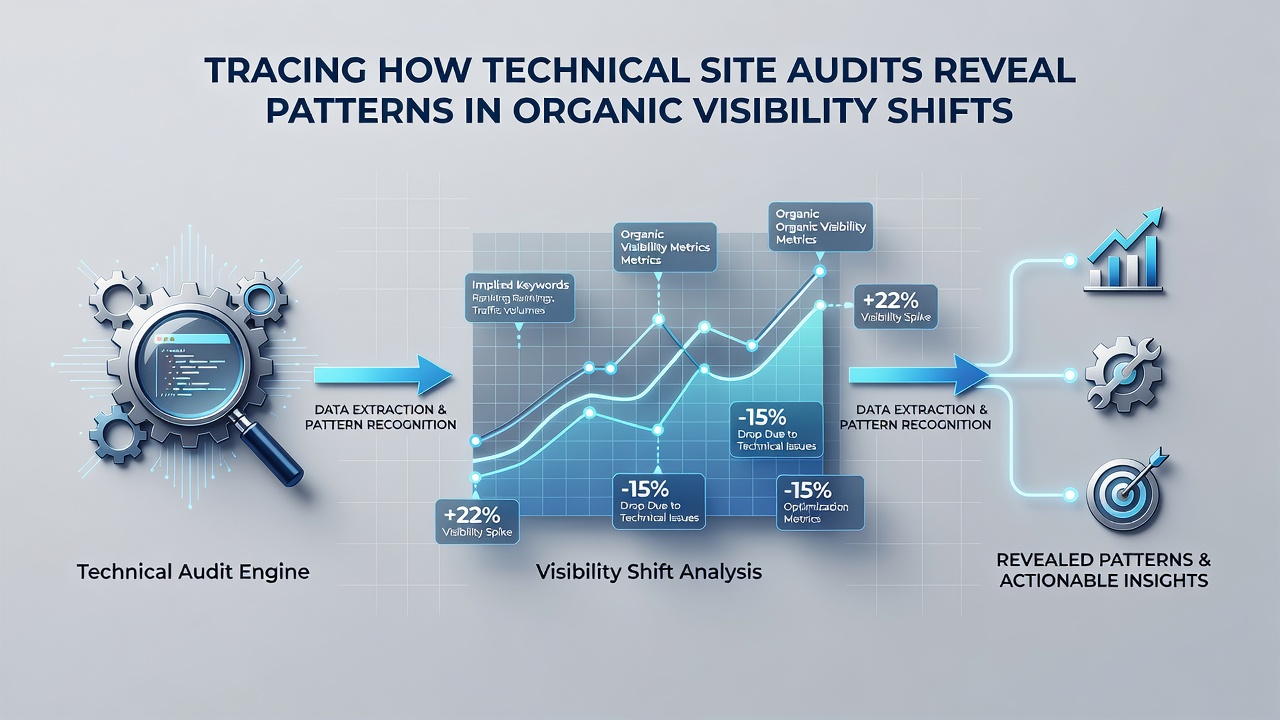
September 2026 brought additional attention to these correlations after several major search engines refined their rendering pipelines, and subsequent audit reports showed increased emphasis on JavaScript execution delays as a contributing factor in visibility fluctuations. Researchers tracking longitudinal data found that domains addressing render-blocking resources within four weeks of detection recovered indexing rates faster than those with delayed remediation.
Tools and Methodologies Employed
Professionals rely on combinations of log file analysis, third-party crawling platforms, and custom scripts to reconstruct how search engine bots interact with sites over time, and this approach uncovers patterns invisible through surface-level metrics alone. Log entries reveal bot frequency variations that align with crawl budget allocations, while comparative audits before and after changes demonstrate direct impacts on indexed page counts. Industry reports compiled by organizations such as the European Commission digital strategy unit highlight how standardized audit frameworks improve consistency when organizations across regions document technical health indicators.
Another useful technique involves segmenting audit findings by page type or directory to isolate which sections drive overall visibility changes, and this granular view helps teams prioritize fixes that produce measurable recovery in organic impressions. Data shows that addressing high-impact issues like HTTPS implementation gaps or hreflang misconfigurations often precedes broader visibility stabilization across international markets.
Longitudinal Tracking and Predictive Value
Repeated audits at regular intervals generate trend lines that predict future visibility risks when certain thresholds are crossed, and organizations that maintain these records report earlier intervention opportunities. Patterns identified include gradual increases in 404 errors following site migrations and sudden spikes in soft 404s after content management system updates. Academic analyses from institutions in multiple countries confirm that sites maintaining audit histories demonstrate more stable indexing behavior during periods of search engine volatility.
Integration of audit results with external data sources such as backlink profiles and competitor benchmarks further refines pattern recognition, allowing observers to distinguish between site-specific technical problems and broader industry shifts. This combined approach has proven effective in cases where visibility changes appeared unrelated to on-site factors until deeper audits revealed underlying infrastructure constraints.
Conclusion
Technical site audits serve as systematic processes for mapping infrastructure elements to organic visibility outcomes, and the patterns they expose enable targeted remediation before declines compound. Evidence accumulated through consistent application of these methods demonstrates repeatable correlations between specific technical conditions and search performance metrics across diverse website types. Continued refinement of audit methodologies supports more precise identification of causal relationships in an evolving search landscape.