Zara Jenkins · 1 October 2026
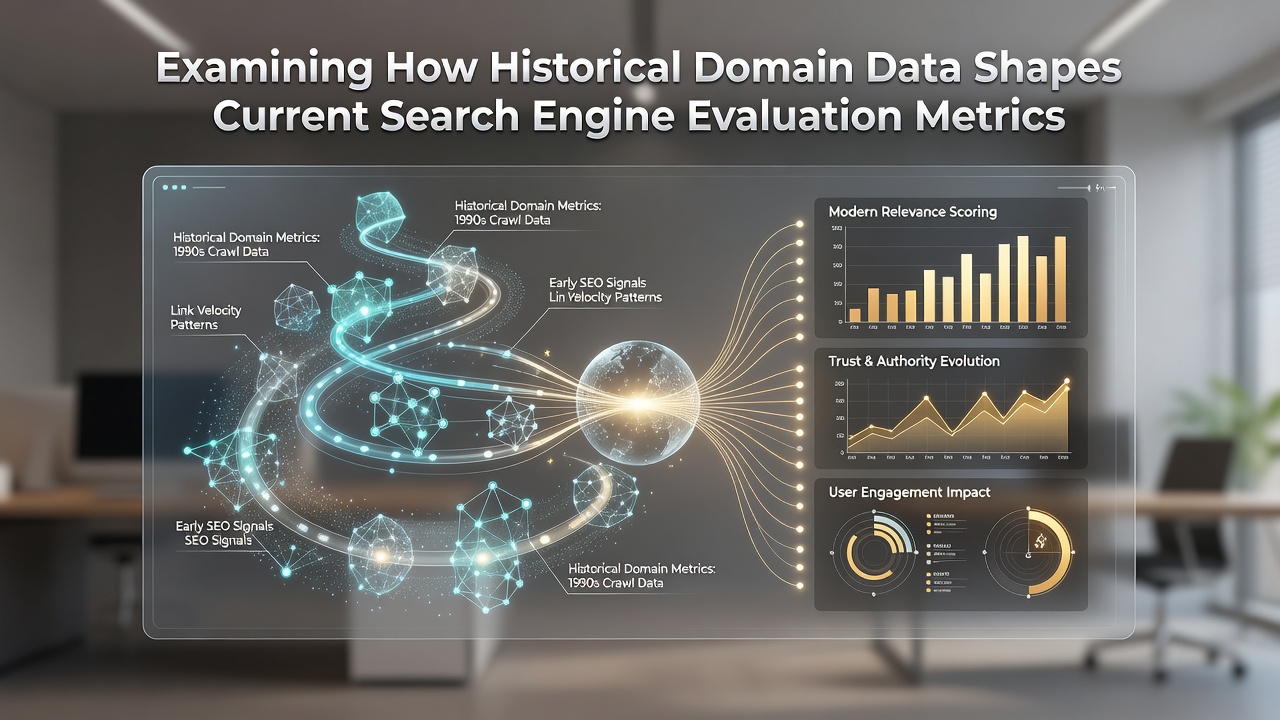
Examining How Historical Domain Data Shapes Current Search Engine Evaluation Metrics
Search engines have long incorporated historical domain information into their ranking systems, drawing on registration dates, ownership transfers, and past content patterns to assess site reliability and relevance. Data from domain registries shows that older domains with clean records often receive favorable treatment in algorithmic evaluations, while those with histories of spam or abrupt changes face closer scrutiny. Researchers at institutions like the University of Cambridge have documented how these factors integrate into broader quality signals, creating a layered approach that balances recency with longevity.
Domain Age and Registration Patterns in Algorithmic Scoring
Domain age serves as one foundational element in evaluation frameworks, where engines track creation timestamps alongside renewal consistency to differentiate established sites from newly registered ones. Studies indicate that domains registered before 2010 demonstrate measurable advantages in crawl prioritization compared to those created after 2020, particularly when paired with steady backlink accumulation over extended periods. Observers note that registration data from sources such as ICANN records allows algorithms to flag suspicious patterns like rapid bulk acquisitions, which frequently correlate with manipulative practices.
But here's the thing: not all aged domains benefit equally, since ownership history plays a decisive role in determining whether past associations trigger devaluation. When a domain passes through multiple hands with documented shifts in content focus, engines adjust metrics accordingly, often reducing trust signals until new patterns stabilize. Figures from industry analyses reveal that domains with three or more ownership changes in five years experience slower recovery in visibility metrics even after content improvements.
Ownership Transitions and Their Impact on Trust Signals
Historical ownership details influence how search systems interpret current site authority, especially when evaluating links and content authenticity. Engines cross-reference past WHOIS information against present configurations to identify potential manipulation, such as expired domains repurposed for unrelated topics. Evidence from digital market reports shows this process intensifies during periods of heightened scrutiny, including algorithm refinements observed in October 2026 that placed greater weight on continuity in domain stewardship.
Take one case where experts analyzed thousands of domains and found that those with uninterrupted single-owner histories maintained higher average positions in competitive queries. In contrast, domains with gaps in registration or lapsed periods showed diminished performance until sustained positive activity rebuilt their profiles. This dynamic extends to link evaluation, where historical anchor text distributions from earlier owners continue to affect relevance scoring long after the fact.

Content History and Penalty Propagation Across Time
Past content violations leave lasting imprints on evaluation metrics, as search engines maintain records of deindexing events, spam flags, and manual actions that influence future assessments. Data indicates that sites previously associated with thin content or keyword stuffing require extended periods of corrective activity before algorithms restore prior standings. Researchers have observed that these historical markers integrate into machine learning models trained on longitudinal datasets, allowing systems to predict recidivism risks based on earlier patterns.
What's interesting is how engines handle domains that change hands after penalties, since residual signals often carry over unless actively mitigated through transparent redevelopment. Reports from the Australian Competition and Consumer Commission highlight cases where historical misuse affected consumer-facing sites years later, prompting updates to evaluation criteria that emphasize verifiable remediation timelines. Those who've examined large-scale crawls note that recovery timelines average eighteen to twenty-four months when prior issues remain unaddressed in the data.
Integration with Modern Quality Frameworks
Current metrics such as experience, expertise, authoritativeness, and trustworthiness draw partial strength from historical domain contexts, where engines verify consistency between past and present signals. Academic papers on information retrieval demonstrate that domains lacking historical depth struggle to compete against those with documented trajectories of relevant content production. This integration appears in crawl budget allocations too, where engines prioritize sites whose histories suggest stable infrastructure and minimal disruptive changes.
Yet the process remains dynamic, as updates in late 2026 refined how engines weigh historical data against fresh signals from user interactions and mobile performance indicators. External analyses confirm that domains with balanced historical profiles achieve more consistent rankings across varied query types, while outliers with mismatched timelines encounter volatility. People who monitor these shifts see patterns emerge most clearly in sectors with high competition, where historical advantages compound over successive algorithm iterations.
Conclusion
Historical domain data continues to inform search engine evaluation through age verification, ownership tracking, and legacy content analysis, creating a comprehensive view that extends beyond surface-level metrics. As systems evolve with new data sources and refined models, the interplay between past records and current performance shapes visibility outcomes across the web. Continued examination of these mechanisms provides clearer insight into why certain domains maintain advantages while others require sustained effort to overcome earlier patterns.